Decentralized digital assets regulations: building a cage for the dragons

Are cryptocurrencies really beyond the control of governments, as many people believe? In this piece, I explore the main regulatory challenges that come with decentralized digital assets.
The Traditional Finance (TradFi) ecosystem faces mounting regulatory challenges as digital assets and decentralized technologies come of age.
The money guardians appointed by governments, the private cartels, and the multilateral financial institutions are all struggling to keep up with cryptocurrency's rapid evolution and the interest it has drawn from investors.
Since the start of the recent bull market at the end of 2020, publicly traded companies, funds, high-net-worth individuals, and even governments have increased their digital-asset holdings substantially.
To date, they hold around 8% of the total Bitcoin supply — roughly USD 65 billion.
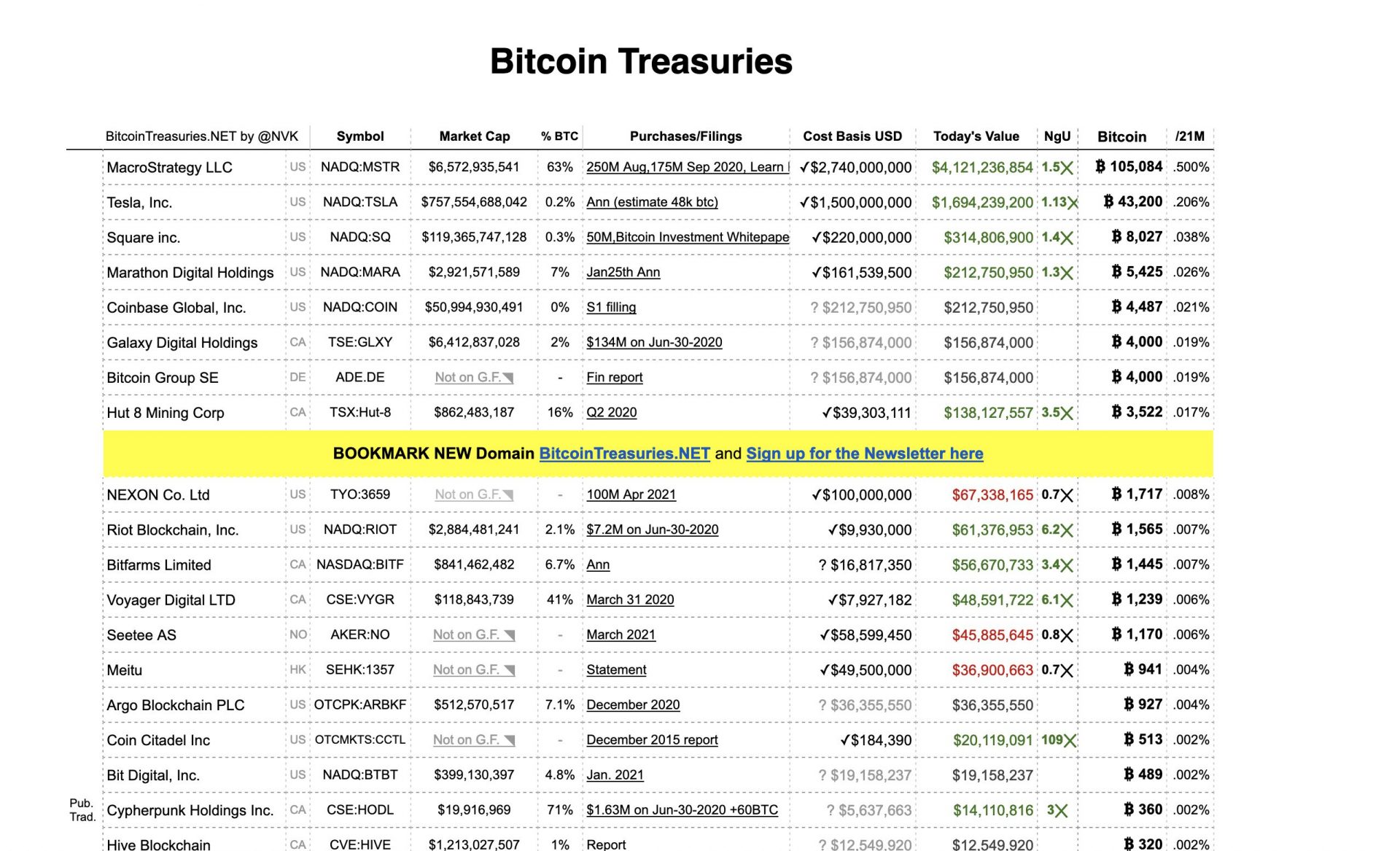 Source: bitcointreasuries.net
My purpose here is to discuss, on the surface, why regulating cryptocurrencies is so fundamentally problematic — and to do that by understanding the nature of decentralized digital currencies such as BTC and ETH.
A rebellious nature
It all started with the ingenuity of the cyberpunk revolution. More than thirty years of open-source work on distributed networks and cryptography paved the way for Bitcoin, the first decentralized digital money.
Bitcoin's inception opened the door to a dramatic upgrade in the way we exchange value.
Its dual reality — at once a secure, cross-border, peer-to-peer monetary network and a ubiquitous currency outside the control of any centralized authority — is, simply, a civilization-grade paradigm shift.
What's more, its by-product, blockchain technology, poses a major disruption to financial institutions. It is an emerging reality none of them can escape.
[Blockchain is] an indisputably neutral, distributed way of expressing individual ownership … the most plausible path towards an ultimate long-term open framework where everyone's in control of their own presence, free of gatekeeping. — Tim Sweeney (2021), cited in Matthew Ball's writing
Onboarding the digital ship
The future, meanwhile, will be faster and even more interconnected than the present. This is a solid premise, framed by Moore's Law and, more recently, by Huang's Law — which goes beyond hardware gains and brings exponential growth to an increasingly AI-dominated era.
That combination has accelerated the shakeup of the banking industry. Fintech made — and continues to make — its part of it; now it is the turn of Decentralized Finance (DeFi) to shine.
More than a decade of Bitcoin and distributed ledger technologies has drawn in over 300 million people and 18,000+ businesses that have dealt with cryptocurrencies at some point. In terms of network-effect estimates, Bitcoin may be at a tipping point, comparable to mobile phone adoption in 1997.
So what does this growing demand for digital assets mean for TradFi? Is it doomed to be replaced by this wave of incremental innovation, or will it survive and adapt to a fast-changing environment?
Digital monies vs digital decentralized monies
To keep things clear: digital money is not a new concept. Think of PayPal, founded 21 years ago, or the digital dollars you have held for ages in your online banking app.
Decentralized digital assets, by contrast, can move freely across jurisdictions in the blink of an eye. What's more, the same cryptographic principles that protect even the most sensitive classified military records are within reach of every human or computer-based entity. Decentralized digital assets are, fundamentally, a different creature.
The former kind of electronic money can be overseen, controlled, and brought under law enforcement. TradFi institutions need licenses and permissions to operate, whereas in DeFi, service providers and users can remain autonomous within the boundaries of their networks.
Compliance challenges
By definition, a public blockchain — and therefore its underlying currencies and tokens — is meant to be permissionless, immutable, and transparent. Because they are web-native and run on open protocols, they need no central intervention, which sets them apart from TradFi's regulatory dependencies.
But let's not be fooled. Although regulators cannot interfere with digital assets at the protocol level, they can intervene at the entry and exit points. How do you buy cryptocurrency? Most likely through a credit-card transaction or a bank transfer — both regulated. What about cashing out? The same process applies.
So the regulation of digital assets really comes down to the problem of interfacing the fiat world with the autonomous universe of the blockchain.
This is where the regulatory challenges start to make sense. How, for instance, should watchdogs handle data-protection mandates when a record cannot be erased or modified once it is written to the blockchain, in most cases?
Or how do you carry out effective market surveillance and KYC/AML/CFT due diligence in an environment where transactions can be masked behind non-personally-identifiable addresses — or escape traceability altogether through autonomous, liquid, censorship-resistant decentralized exchanges such as SecretSwap?
The state of things
Today, only a handful of countries have statutory laws and regulations in place for digital assets — for their classification, their custody, and their management.
Interestingly, while this conversation plays out, TradFi instruments such as derivatives, prime brokerage, and synthetics already have emulated versions running under the DeFi umbrella. DeFi is also becoming more agnostic, scalable, and interoperable through second layers, side-chains, and swaps between blockchain networks. It seems impossible for these digital organisms to stop growing and expanding.
It is deeply worrying that policymakers have been so slow to react to issues that may carry huge implications for the world's financial stability.
If governments stay one step behind innovation, market forces will push private individuals to demand regulatory clarity and to build secure environments for interfacing TradFi with digital assets. That scenario would have a limited impact.
Alternatively, a lack of consensus could allow DeFi to fortify itself to the point where it becomes a legitimate, independent body — a utopia, or dystopia, dominated by the promising Bitcoin Standard.
How to address cryptocurrency regulations?
Coming back down to earth, and to the year 2021, we may find some clarity in Hayek's words.
He argued that, by its nature, information is scattered across individuals. The collective sum of those fragments leads to better decision-making — more effective than the narrow views of isolated central authorities.
By recognizing the reality of this emerging asset class, international cooperation can become the basis for comprehensive, enforceable frameworks. And in those conversations, the private sector — and the people who built these technologies — need a seat at the table.
Done well, this could foster a secure flow of digital assets under the premises of free-market law, in tune with the protection that enterprises and other key actors expect.
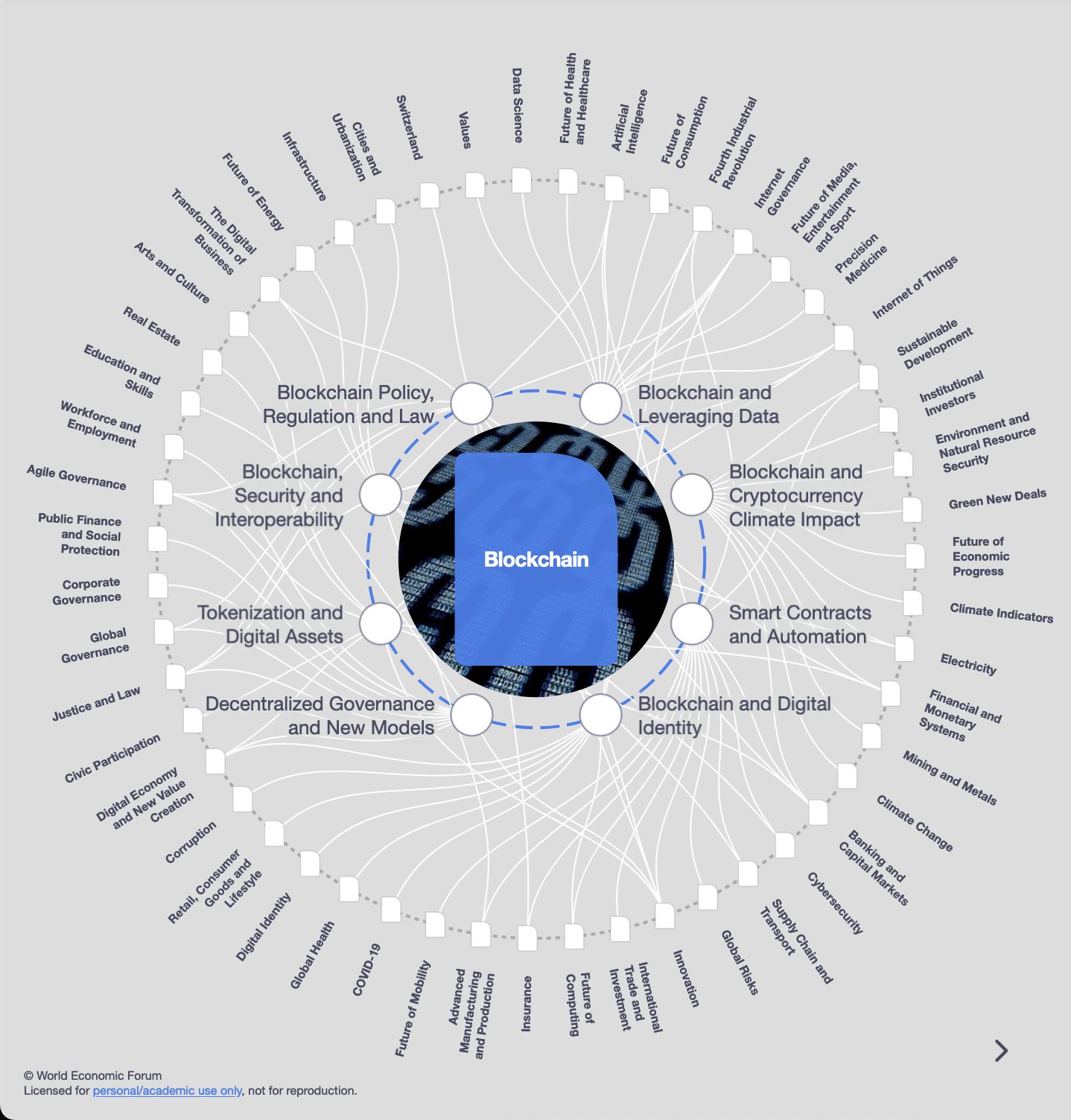 World Economic Forum report on blockchain
Fittingly, the World Economic Forum recently published a report on blockchain technologies that offers an interesting overview of policy, regulation, and law. It is worth reading.